Category
Seminar/Talk
12
Days22
Hours05
MinutesSeminar/Talk
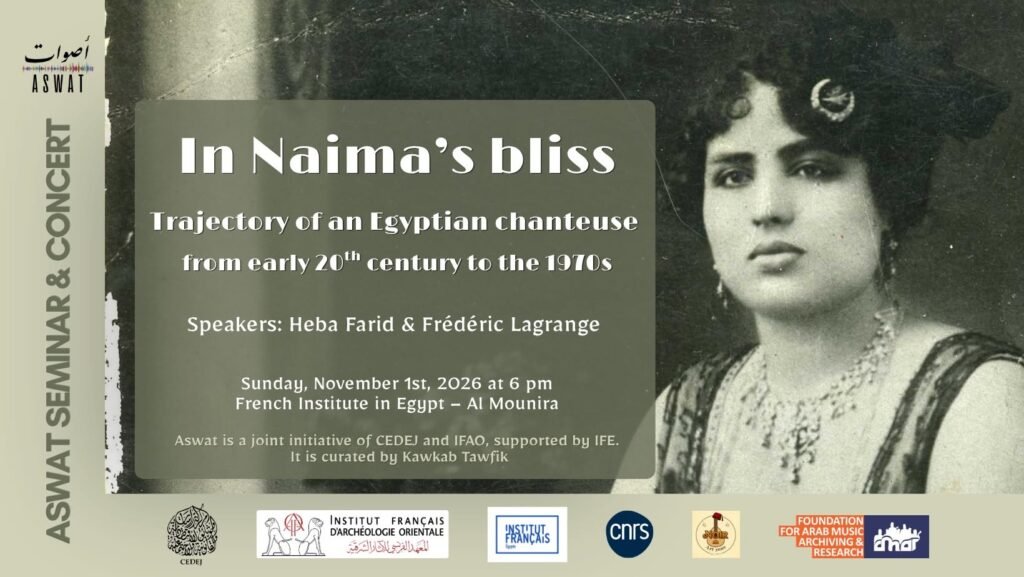
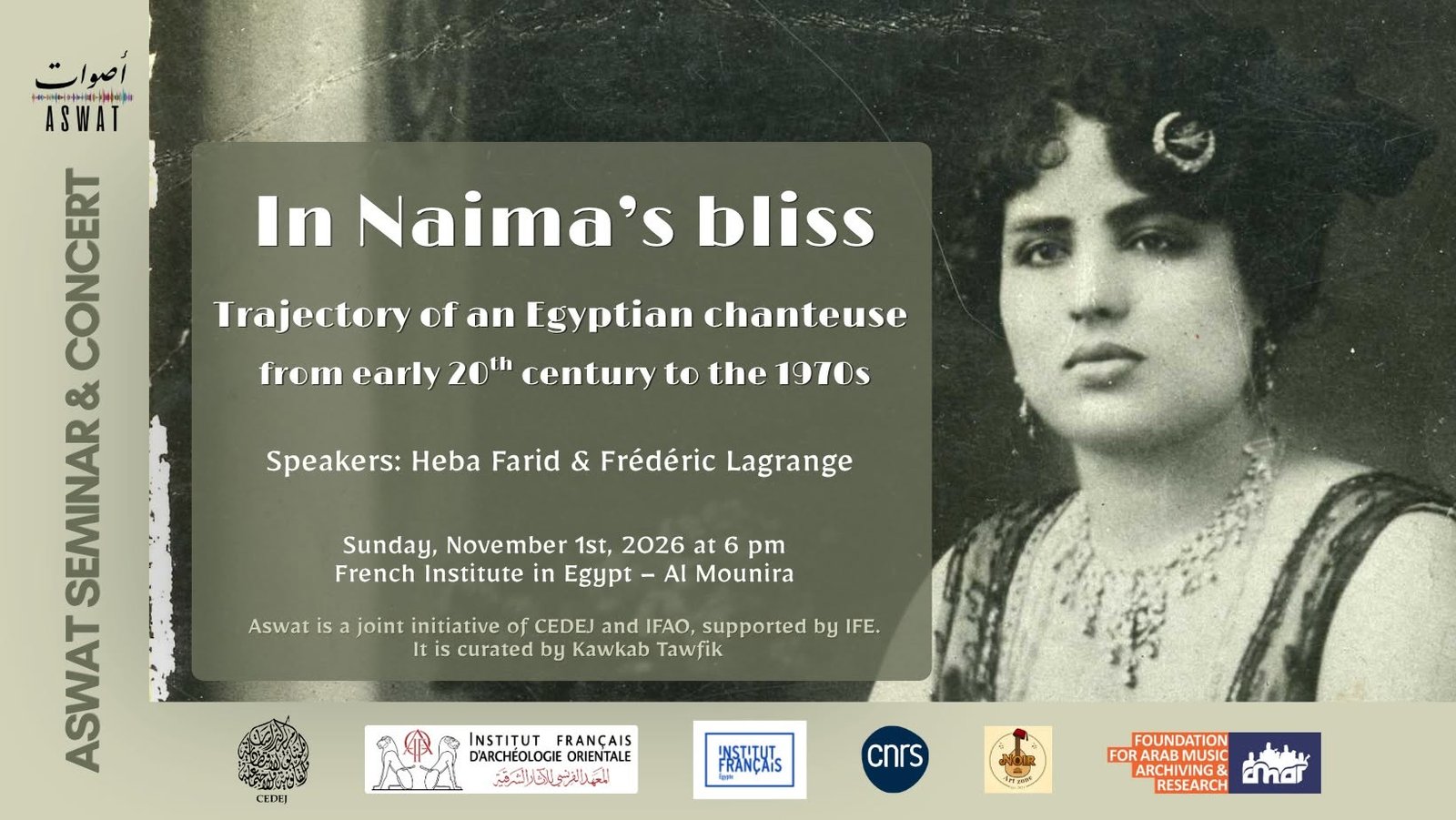
In Naima's Bliss traces the trajectory of Na'ima al-Misriyya (1894–1976), one of the most famous performers in Cairo's music scene from World War I to the mid-1930s and a major recording artist of the booming disc industry.
Her story raises questions about what it meant to be a "female artist" in 20th-century Egypt: a changing music economy, early female empowerment, modernity intersecting with class and gender, and a revolution in lyrics that blurred what was considered "singable". New aesthetic and moral discourses later erased her from the official history of Egyptian music, despite her work with icons such as Sayyid Darwish, Mohamed El Qasabgi and Zakariyya Ahmad.
Heba Farid, the artist's great-granddaughter and creator of the Na'ima al-Misriyya Music Research and Photograph Collection, presents the project. Frédéric Lagrange places Na'ima among other female performers of the roaring 20s, including Munira al-Mahdiyya, Ratiba Ahmad, Fathiyya Ahmad and Umm Kulthum, with a selection of her recordings.
The talk is followed by a concert by Firqat al-Afandiyya and Noir Art Zone.
Part of ASWAT, a series of music meetings and performances exploring musical practices across Egypt and beyond, a joint initiative of CEDEJ and IFAO supported by the Institut français d'Egypte, curated by Kawkab Tawfik.
Institut français d'Egypte, 1 Madrasset El Hoquq El Frenseya Street, Mounira, Cairo